
Importers often purchase several product categories from different factories to expand their range, reduce supplier dependence, or build a complete seasonal collection. However, every additional supplier introduces another packaging specification, production schedule, label file, carton size, and delivery deadline.
Without centralized management, one factory may use the wrong barcode, another may complete production before its packaging arrives, and a third may ship cartons that cannot be efficiently consolidated.
For overseas brands, retailers, wholesalers, and e-commerce sellers, packaging sourcing should therefore be managed as part of the complete procurement process. A China sourcing agent can coordinate product suppliers, packaging factories, inspections, warehouse receiving, and final shipping through one controlled workflow.
Different factories often follow their own packaging standards. Even when the buyer provides general instructions, suppliers may interpret the requirements differently.
Common problems include:
Inconsistent logo size or position
Different barcode formats
Incorrect SKU labels
Unapproved packaging materials
Weak or oversized shipping cartons
Missing warning labels
Packaging delivered after the products are finished
Carton marks that do not match shipping documents
Different units packed per carton
These differences become more serious when products must be shipped together. Incorrect carton information can delay warehouse receiving, freight booking, customs documentation, or distribution after arrival.
A sourcing agent helps establish one packaging-management system for all participating suppliers rather than allowing each factory to make separate decisions.
The first step is to prepare a controlled packaging file that applies to every relevant supplier.
The specification may include:
Unit packaging type
Packaging dimensions
Approved materials
Logo and artwork files
Product name and model
SKU and barcode format
Required warning labels
Country-of-origin marking
Units per inner carton
Units per master carton
Shipping-mark format
Carton weight limits
Pallet or handling requirements
Not every product needs identical packaging, but the presentation and information should remain consistent across the complete range.
For example, a retailer sourcing bags, apparel, pet accessories, and office products may use different package structures while keeping the same logo rules, label format, typography, and carton-marking system.
Revision control is essential. When the buyer updates a barcode, product description, or artwork file, the sourcing agent should confirm that every affected supplier has received and approved the latest version.
Accurate packaging cannot be developed without confirmed product dimensions and packing methods.
A product supplier should provide:
Finished product dimensions
Folded or compressed dimensions
Product weight
Accessories included
Protection requirements
Preferred packing orientation
Units per carton
Restrictions on compression or stacking
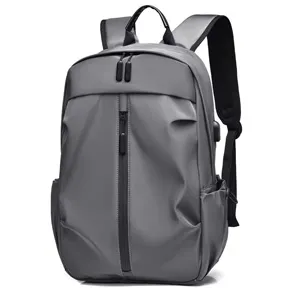
This information is especially important for soft goods. A qualified backpack supplier should confirm how the shoulder straps, handles, padding, accessories, and filling materials will be arranged before the polybag, retail package, or master carton is approved.
The sourcing agent can coordinate sample exchanges between the product factory and packaging supplier. A physical product may be sent to the packaging factory for fit testing, or packaging samples may be delivered to the product manufacturer for trial packing.
This prevents common problems such as oversized boxes, damaged trims, excessive empty space, or incorrect insert dimensions.
Packaging delays can postpone an otherwise completed order.
A master schedule should connect:
| Production Stage | Packaging Action |
|---|---|
| Product sample approval | Confirm dimensions and packaging brief |
| Artwork approval | Release printing files |
| Material preparation | Check packaging-material availability |
| Product mass production | Begin packaging production |
| Packaging completion | Deliver to product factory |
| Final packing | Confirm correct SKU and quantity |
| Inspection | Check products and packaging together |
| Warehouse delivery | Verify carton data and shipping marks |
Packaging should ideally arrive before the product factory begins final packing. If it arrives too early, it may occupy storage space or become damaged. If it arrives too late, finished products may remain unpacked and delay inspection.
Through centralized packaging sourcing, HW Sourcing can follow both schedules and identify potential conflicts before they affect the shipping date.
Packaging should be included in the product-inspection criteria rather than checked only after goods reach the export warehouse.
Inspection may cover:
Packaging dimensions
Material and structure
Printing accuracy
Logo position
Color consistency
Barcode readability
Product and SKU labels
Warning statements
Packing quantity
Carton condition
Shipping marks
Product fit and protection
The inspector should compare the goods with the approved packaging sample and current artwork file.
For multiple suppliers, one standardized checklist helps ensure that the same requirements are applied across every factory. Inspection records should identify the supplier, product code, packaging revision, batch quantity, and defects found.
Where problems can be corrected, the sourcing agent can coordinate relabeling, carton replacement, repacking, or reinspection before the goods are released.
After inspection, finished goods from different factories can be delivered to a consolidation warehouse.
The warehouse provides a central point for:
Receiving and counting cartons
Checking exterior damage
Matching goods to packing lists
Confirming carton dimensions and weights
Replacing damaged cartons
Applying missing labels
Separating products by SKU or destination
Combining goods into one shipment
Preparing the final loading plan
Consolidation is useful when no single supplier produces enough cargo to fill a container or when the buyer wants to reduce the number of international shipments.
However, the warehouse should not become the first place where packaging problems are discovered. Major printing, structural, or labeling defects should be identified at the factory, where corrective action is usually easier.
Packaging affects landed cost because international freight is calculated partly by cargo weight and volume.
A sourcing agent can compare:
Product quantity per carton
Carton dimensions
Gross weight
Stackability
Pallet use
Container utilization
Risk of damage during compression
Reducing carton size can lower freight costs, but excessive compression may deform the products or damage accessories. Increasing the number of units per carton may also create boxes that are too heavy for safe handling.
The final plan should balance product protection, warehouse requirements, shipping efficiency, and destination-market distribution.
Accurate carton data allows the logistics team to select a suitable courier, air-freight, LCL, or FCL shipment and prepare a more reliable freight quotation.
Managing several product factories, packaging suppliers, inspectors, and logistics providers can create fragmented communication.
A China sourcing agent provides one coordination point for:
Packaging specifications
Artwork revisions
Supplier questions
Sample approvals
Production schedules
Inspection findings
Repacking requirements
Warehouse receiving
Freight preparation
Shipping documents
This reduces the risk of suppliers receiving conflicting instructions and gives the buyer a clearer view of the complete order.
After delivery, supplier performance can also be reviewed according to packaging accuracy, production timing, responsiveness, defect rates, and corrective-action capability.
Multi-product packaging sourcing requires more than purchasing boxes, bags, and labels. It involves creating unified packaging standards, coordinating product and packaging suppliers, aligning production schedules, inspecting finished packaging, consolidating goods, and using accurate carton data to control shipping costs.
HW Sourcing manages these activities as part of the complete procurement process. We coordinate supplier requirements, packaging development, artwork files, production follow-up, quality checks, warehouse receiving, consolidation, and international delivery.
By managing packaging across all suppliers through one workflow, overseas buyers can reduce labeling errors, avoid unnecessary shipping volume, improve brand consistency, and keep multi-product orders on schedule.



 English
 日本語
日本語 한국어
한국어 русский
 tiếng việt
 ไทย
ไทย